From February to November of 2022, I wrote a newsletter called The Weekly Letter on the platform Ghost. The original website is no longer live, but I have just set up a page on this blog with a PDF of each post. You can view the archive here

Thoughts on politics and theory
From February to November of 2022, I wrote a newsletter called The Weekly Letter on the platform Ghost. The original website is no longer live, but I have just set up a page on this blog with a PDF of each post. You can view the archive here
What is liberalism? How do liberals think government should be structured? And how is liberalism being challenged by religious political alternatives? For the second video on my YouTube channel, I spoke with my former Bowling Green State University professor Kevin Vallier about these topics and more.
I am excited to share that I’ve begun working in a new medium—video! On my YouTube channel, I plan to explore politics, philosophy, and religion—sometimes all at once—through conversations and video essays.
I kicked off the channel back in May with a conversation with my former Earlham College professor Peng Yu on the politics of the ancient Chinese philosopher Zhuangzi. We discuss Zhuangzi’s views on language, the body, uselessness, and explore a “depoliticizing” approach to politics.
I hope you enjoy the conversation!
You can also check out my interview with Peng on contemporary Chinese politics published in 2018 on this blog.
This post is adapted from an issue of The Weekly Letter, a newsletter I wrote during most of 2022. The newsletter is not currently accessible online, although I aim to archive it on this blog at some point.
Is it possible to address the environmental crises we face while continuing to pursue economic growth? I draw on several pieces referenced by Spencer Bokat-Lindell in his excellent article for The New York Times reviewing the green growth vs. degrowth debate as well as some other sources.
Economic growth—as measured by the indicator Gross Domestic Product (GDP)— has led to exceptional material prosperity, remarkable technologies, and great advancements in health. To take one example, in a Vox article, Kelsey Piper notes that there is a strong correlation between low child mortality and high GDP per capita. But the effects of the growth-focused economic system are not all positive. The growth model has steamrolled alternative economic, and often political, systems, reshaping the whole world in the image of the Global North. There is massive economic inequality, both within and between countries, and many people are unable to meet their basic needs. And most relevant to the question of whether growth can be environmentally sustainable, the growth-focused model has led to environmental crises, including climate change and biodiversity loss, which threaten the planet’s life support systems.
The prevailing approach to addressing environmental crises is known as green growth. Proponents of green growth argue that it is possible to continue growing GDP while also reducing material and energy use and quickly reaching net zero carbon emissions. However, some environmentalists have championed an alternative approach known as degrowth. In a journal article, degrowth proponent Jason Hickel writes, “Degrowth is a planned reduction of aggregate resource and energy use in high-income nations designed to bring the economy back into balance with the living world in a safe, just and equitable way.” Indeed, advocates argue that degrowth is necessary to bring the economy and the planet into balance. Hickel and Giorgos Kallis write in a review of empirical studies of green growth:
“extant empirical evidence does not support the theory of green growth. This is clear in two key registers. (1) Green growth requires that we achieve permanent absolute decoupling of resource use from GDP. Empirical projections show no absolute decoupling at a global scale, even under highly optimistic conditions. While some models show that absolute decoupling may be achieved in high-income nations under highly optimistic conditions, they indicate that it is not possible to sustain this trajectory in the long term. (2) Green growth also requires that we achieve permanent absolute decoupling of carbon emissions from GDP, and at a rate rapid enough to prevent us from exceeding the carbon budget for 1.5°C or 2°C. While absolute decoupling is possible at both national and global scales (and indeed has already been achieved in some regions), and while it is technically possible to decouple in line with the carbon budget for 1.5°C or 2°C, empirical projections show that this is unlikely to be achieved, even under highly optimistic conditions.”
In other words, Hickel and Kallis argue that evidence shows that a growing economy will, first, use more natural resources than is sustainable and, second, likely fail to make the transition away from carbon emissions quickly enough to meet the Paris Agreement targets. For these authors, green growth is an illusion.
(On climate change, a key issue is whether it is appropriate to employ bioenergy with carbon capture and storage (BECCS). Hickel and Kallis write that BECCS “entails growing large tree plantations to sequester CO2 from the atmosphere, harvesting the biomass, burning it for energy, capturing the CO2 emissions at source and storing it underground.” The authors make the case that BECCS is unproven and potentially damaging for people and the planet.)
The social dimension of degrowth is crucial. While high-income countries would switch from a growth-based economic model, low- and medium-income countries would continue to grow their economies until a greater level of wealth is reached. And within high-income countries, degrowth advocates support policies such as job and income guarantees, decommodification of public goods, and democratization of the economy. The premise is that policies like these would prevent a drop in GDP from causing the economic pain and decreased wellbeing that occurs when growth-based economies enter recessions.
As the degrowth argument has gained traction, advocates of green growth have pushed back. Here, I will highlight two critiques of degrowth.
One argument is that degrowth is not politically feasible. Either degrowth will always be a losing battle in high-income countries or, while it may eventually attract enough support to be politically possible, this consensus will not be built in the vanishingly short amount of time we have left to address climate change. Spencer Bokat-Lindell quotes Eric Levitz of New York magazine:
“’Americans might well find themselves happier and more secure in an ultra-low-carbon communal economy in which individual car ownership is heavily restricted, and housing, health care, and myriad low-carbon leisure activities are social rights.’ But, he adds, ‘nothing short of an absolute dictatorship could affect such a transformation at the necessary speed. And the specter of eco-Bolshevism does not haunt the Global North. Humanity is going to find a way to get rich sustainably, or die trying.'”
A second argument is that due to the interconnectedness of the global economy, economic contraction in high-income countries would hamper economic growth in low- and middle-income countries. In the Vox article mentioned earlier, Kelsey Piper writes:
“the pandemic offered a taste of how a sudden drop in rich-world consumption would actually affect the developing world. Covid-19 dramatically curtailed Western imports and tourism for a time. The consequences in poor countries were devastating. Hunger rose, and child mortality followed….
Hickel’s perspective is that most trade between rich and poor countries is extractive, not mutually beneficial — and that maybe when that dynamic ceases, poor countries will have the chance for the catch-up growth they merit. That’s one take. But it means that degrowth’s case for not crushing the poor world is predicated on a speculative take on how those countries can grow — one that democratically elected leaders in those countries largely don’t share.”
If it is true that a decrease in imports by high-income countries would inevitably harm low- and middle-income countries, this undermines degrowth’s commitment to just social outcomes.
As the green growth/degrowth debate rages on, there have been attempts to “reach a truce…” In an article for openDemocracy, Beth Stratford argues that both sides should reach a consensus “on a basic set of demands that can stop us hurtling toward ecological collapse.”
Additionally, degrowth is not the only framework that challenges the growth-based model. Another framework, called doughnut economics, was developed by Kate Raworth. The principle of doughnut economics is that economies’ resource use should be sufficient to meet everyone’s needs without destroying the Earth’s life support systems. Right now, the problem is that “millions or billions of people worldwide still fall short on their most basic of needs” while “we’ve already overshot at least four… planetary boundaries…” For Raworth, it’s necessary to “overcome this structural dependency on growth, so that we can instead focus on thriving and balance within the social and the ecological boundaries of the doughnut.”
The question of whether it is possible to create a just, sustainable world through green growth or whether it is necessary to move to something like degrowth or doughnut economics is complicated and deserves careful consideration. But I think this is precisely the conversation we need to have. And right now, both supporters and opponents of green growth should find where they agree and push for meaningful changes in social and environmental policy.
Just for a moment, let’s think beyond the violence that began over the weekend. Beyond the previous waves of violence and beyond the failed peace process. Instead, consider the aspirations of Israelis and Palestinians. While there are different versions of the Israeli and Palestinian political projects, the key aspirations of both sides are compatible. For Israelis, the goal is to overcome anti-Semitic oppression and violence by establishing a home where Jews can control their own destiny. For Palestinians, the goal is to overcome colonial oppression, occupation, and material insecurity by achieving political freedom. The tragedy is that history has unfolded in such a way that the two liberation projects have found themselves on a collision course.

The reasons for this collision are beyond the scope of this article. They involve British colonialism; European anti-Semitic oppression and genocide; the problematic ideal of a nation-state centered on one ethnicity; and geopolitical interests that run counter to reconciliation. But here’s the main point: the collision was not inevitable, and it is possible to imagine a future where Israeli and Palestinian visions can both be realized.
Clearly, the dynamic in Israel-Palestine is one of power imbalance: Palestinians face the structural injustice of Israel’s occupation and system of apartheid. However, this does not negate the validity of the goal of a homeland where Jews can be free of anti-Semitic oppression.
The stalled Israel-Palestine peace process has focused on a two-state solution—one state for Israelis and one state for Palestinians. However, as Peter Beinart argues in an opinion piece, it is possible for there to be a Jewish home without a Jewish nation-state: “A Jewish state has become the dominant form of Zionism. But it is not the essence of Zionism. The essence of Zionism is a Jewish home in the land of Israel, a thriving Jewish society that can provide refuge and rejuvenation for Jews across the world.” Whatever the specific political structure, a resolution to the conflict requires a safe haven for Jews and freedom for Palestinians.
Clearly, there is no military solution. The military strategies of Hamas (certainly not the only Palestinian political organization but probably the most significant armed force) and Israel rely upon killing and harming civilians. Instead, a just political solution must be reached. It is necessary for the global community to condemn the violence of the moment, both Hamas’ attacks on civilians and Israel’s collective punishment of Palestinians. It is also essential to work with renewed urgency toward a resolution in line with the aspirations of both Israelis and Palestinians. Israel-Palestine is a tragedy, but it doesn’t have to be.
The smoke from wildfires in Canada smothering New York and elsewhere in the U.S. is a grim milestone—perhaps the first time that an impact of climate change has been so dramatically visible to me. When I went outside on Tuesday, the campfire smell was obvious. Since then, I’ve stayed inside. Still, some of the smoke seeped inside my home.

While climate change is already affecting many people—especially those who have done the least to contribute to it—I have so far been pretty sheltered. But yellow skies and smoky air are impossible to miss, especially because I have asthma. On the whole, I remain lucky; I have access to medication for asthma and my breathing has been OK. But the feeling of being amid a crisis is a heavy burden. In the early days of the Covid pandemic, I realized that the world really could change in ways that affect me intimately. The wildfire smoke is a similar wakeup call for climate change. Breathing the remnants of Canadian trees into my nose and lungs demonstrates the downside of the world’s interconnectedness and proves that climate change can throw things seriously out of whack.
Somini Sengupta of the New York Times writes:
“It’s not officially summer yet in the Northern Hemisphere. But it’s already a season of extremes. Fires are burning across Canada, blanketing parts of the eastern United States with smoke. Puerto Rico is under a severe heat alert. Earth’s oceans have rapidly heated up. Human-made climate change is a force behind all of these extremes. The events of this week show how unprepared the world’s richest continent is for the hazards of the not-too-distant future.”
This may be the first time that climate change has hit home for me, but it won’t be the last. Nevertheless, it remains possible to limit climate change. This century does not have to be defined by crises. I hope to turn this feeling of unease into an impetus for taking action for climate justice.

Originally published in the June 12, 2022 issue of The Weekly Letter newsletter.
On June 24, 1973, Sylvia Rivera took the microphone at the Christopher Street Liberation Day rally in Washington Square Park, NYC. Facing boos from the crowd, Rivera spoke:
“Y’all better quiet down. I’ve been trying to get up here all day for your gay brothers and your gay sisters in jail that write me every motherfucking week and ask for your help, and you all don’t do a goddamn thing for them…. They’ve been beaten up and raped after they’ve had to spend much of their money in jail to get their self home and to try to get their sex changes. The women have tried to fight for their sex changes or to become women of the Women’s Liberation and they write STAR, not the women’s groups, they do not write women, they do not write men, they write STAR because we’re trying to do something for them…. I have been beaten. I have had my nose broken. I have been thrown in jail. I have lost my job. I have lost my apartment for gay liberation and you all treat me this way?…”
(See video of the speech here.)
While Rivera was a pioneer who fought for all members of what is today called the LGBTQ+ community, her contribution to the struggle of transgender and gender nonconforming people was especially deep. Along with Marsha P. Johnson, Rivera founded the organization Street Transvestite Action Revolutionaries (STAR), which adopted a left-wing manifesto for liberation and provided support for transgender prisoners and unhoused transgender people.
(Gender terminology was in flux during Rivera’s time, and Rivera described her own gender identity in different ways during her life. She is commonly considered a trailblazer for transgender rights, and I primarily use the term “transgender” here to refer to the community she fought for.)
However, the presence of Rivera and others who identified as drag queens at the rally was virulently opposed by members of the organization Lesbian Feminist Liberation, which considered drag queens “female impersonators” (during her own speech, a member of the organization, Jean O’Leary, referred to Rivera as “a man”). Rivera asserted in her speech that she and other gender nonconforming people were marginalized due to factors of race and class. She said that unlike the “men and women that belong to a white, middle-class… club,” those at STAR House “are trying to do something for all of us…”
Rivera was anguished by her treatment at the rally. The context of Rivera’s speech is discussed in the 2017 documentary The Life and Death of Marsha P. Johnson (available on Netflix). In an archival interview featured in the documentary, Rivera says that after the rally she attempted to kill herself (her life was saved by Johnson). She then left the gay liberation movement.
When Rivera returned to activism years later, she resumed her struggle against the oppression of transgender people. And she was not afraid to criticize the mainstream of the gay liberation movement when it marginalized the transgender community. One focus of Rivera’s ire was the attitude that trans people should wait for their rights until after gays and lesbians secured theirs.
The story of Sylvia Rivera has a lot to teach us. On the negative side, it tells us that social movements can shamefully marginalize those who are multiply oppressed—and on the front lines of the movement—in the name of pragmatism and respectability. The disdain of some feminists toward drag queens also indicates that for some on the left, ideology can take precedence over solidarity.
We can see this fairly clearly in the position of trans-exclusionary radical feminists today. But we can also see the privileging of ideology over solidarity in other contexts, such as in the history of left-wing support for repressive countries because of their status as ‘workers’ states’ or supposedly anti-imperialist states. From the Communists who denied or excused Stalin’s atrocities to Western leftists who viewed Syrian revolutionaries as American puppets, the left has often lost its way regarding international issues due to unquestioning adherence to faulty doctrines.
However, Sylvia Rivera’s uncompromising commitment to the transgender community, to LGBTQ+ liberation more broadly, and her STAR organization’s support for a revolutionary transformation of society as a whole represents the left-wing spirit of solidarity at its best. From the personal to the system-wide, Rivera believed in a revolution from the bottom-up. Her insistence that no one be left behind is an example of a left-wing impulse that is perhaps most elegantly stated in the Industrial Workers of the World slogan, “An injury to one is an injury to all.”
The importance of prioritizing support for political demands for equality over dubious ideological speculation is argued in an episode of ContraPoints by the YouTuber Natalie Wynn. Wynn argues that opponents of transgender rights distract by asking trans people to justify their gender identity through asking questions like, “what is a woman?” This leads to a dead-end debate about metaphysics and semantics. But the real issue, Wynn says, is not the metaphysics of gender but the concrete reality of inequality and discrimination against trans people.
(Wynn has herself been criticized for comments and actions that have been viewed as marginalizing non-binary people. An article on the website Pride addresses this controversy.)
I think this focus on achieving equality can also help reframe some of the issues that are embroiled in the ‘culture wars.’ Whatever the right-wing may say, the LGBTQ+ movement is not attempting a cultural takeover—it’s demanding dignity and equal status. It’s engaged in a political struggle.
If the fight against oppression is a core part of the left-wing project, then our focus has to be on how we can achieve equality—or, more accurately, equity—concretely in the real world. Although our basic commitments are informed by theory, we must be wary of the ways in which doctrine can steer us away from solidarity.
We are in the middle of a wave of backlash against political and social progress made by the LGBTQ+ community. As a heterosexual and cisgender man, I don’t presume to propose how to guard against the backlash and take the next steps forward. But I will do my best to be in solidarity with the struggle for equity. An injury to one is an injury to all.
I’m very excited to introduce a new project: The Weekly Letter.
Every week, I select a few news stories and opinion articles that I find interesting. To create a conversation, readers are encouraged to write in with their thoughts on the pieces featured in the newsletter. Some weeks I share my views as well.
The focus of the newsletter is politics in a broad sense: it’s about how humans choose to live with one another and with the other living beings on this planet.
Check out the website to read the issues published so far and subscribe (for free!) to get future newsletters delivered to your email.

Joe Biden will be the 46th President of the United States. He faces a challenge that can hardly be overstated.
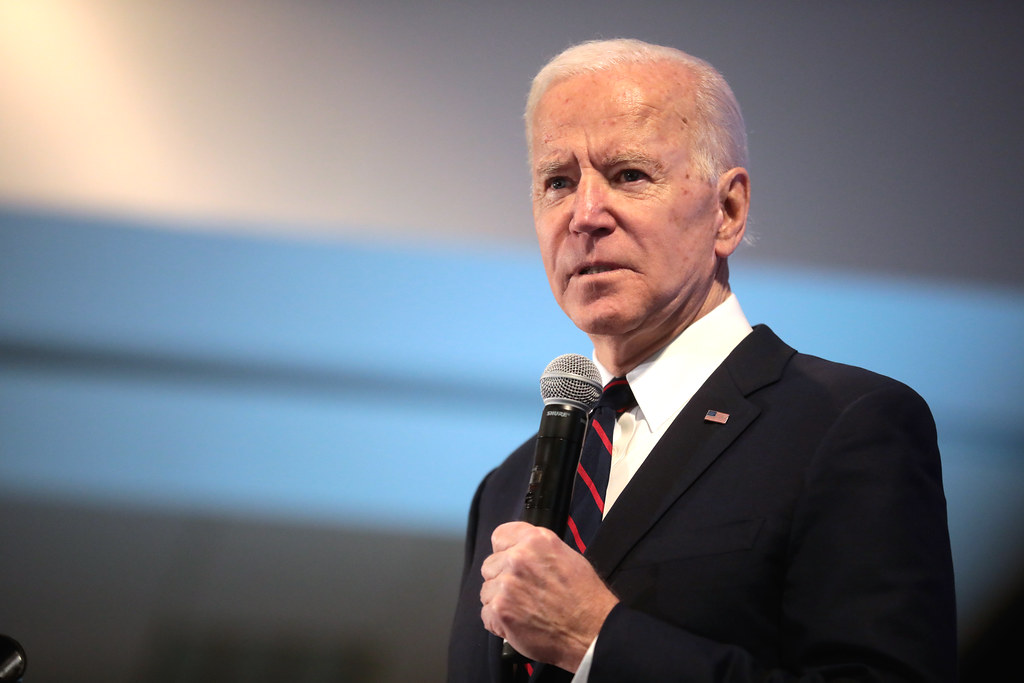
Of course, Biden has said so himself. In his acceptance speech during the Democratic National Convention, Biden said the United States faces “four historic crises.” These crises are the global COVID-19 pandemic that continues to worsen in the United States; an economy shaken by the pandemic; climate change; and continuing racial injustice underlined by police killings of Black Americans.
Addressing these crises with the country’s people and political leadership on the same page would be tough enough. But of course, the United States is deeply divided. Biden faces the possibility that progressive policies will be struck down by a Supreme Court that has a 6-3 conservative majority following the effective steal of a Court seat by the GOP completed by the confirmation of Amy Coney Barrett in October. And whether progressive legislation will make its way through Congress to Biden’s desk at all depends in part on whether Democrats retake the Senate. Senate control, in turn, will come down to runoff elections in Georgia.
Further, Trumpism as a political force remains strong. At the moment, the popular vote tally shows that nearly 74 million Americans voted for Trump; Biden’s popular vote advantage, while not insignificant, is not the powerful refutation of the far-right that progressives hoped for. And it is difficult at first glance to see how progressives can further erode far-right support because of the U.S.’ deep polarization that falls along a rural-urban divide and is exacerbated both by social media and lack of trust in traditional news media.
Biden himself has limited means to address this division and hostility among Americans. After all, Barack Obama did everything he could in the name of unity during his time in office and got the Tea Party and birtherism in return. Biden will have greater success avoiding demonization by the right solely because of the color of his skin; nevertheless, Republican leaders will do what they can to hurt Biden. Surely it would be wrong for Biden to compromise his agenda and moderate his policies in search of an elusive bipartisanship. Instead, he should continue appealing to common values and speaking a common language in his public messaging. Biden doesn’t have to act like a unifier because that is what he is; he just can’t assume that the GOP will follow suit. If there is going to be a political thaw, it will come from small-scale grassroots initiatives rather than from Biden’s efforts alone.
Despite the division, Biden must act in response to the crises we face. Addressing the COVID-19 pandemic, achieving a just economic recovery, taking climate action, and realizing racial justice are necessary. We have to hope that enacting meaningful change leads to greater public support for the Biden administration.
There is also a larger challenge that transcends Joe Biden and this election. It is the challenge of moving from a society that almost exclusively values economic growth to one that focuses on the wellbeing of all people and the ecosystems that we are inextricably a part of [Note 1]. This project is beyond the scope of political leaders, although it is by no means apart from electoral politics.
Perhaps this challenge—our challenge—can provide clarity and focus in this political moment.
[1] In discussing this challenge, I am indebted to the framework of ‘The Great Turning’ as discussed by David Korten and Joanna Macy.
The contemporary capitalist economy in the United States faces at least five crises: a drive for growth that has decimated the environment; a dependence upon alienated labor; accelerating economic inequality; entrenched social inequities; and an inability to provide economic security. It is possible for the government to take steps to address these challenges within the current economic framework. However, it is not clear that even the boldest social democratic reforms will enable capitalism to go on without continuing to cause fundamental harms. Because reform may not be enough, I want to consider one possible alternative economic framework: a version of market socialism committed to ecological sustainability.
I use the term “market socialism” because the system I outline here is concerned with realizing equity and eliminating labor alienation while maintaining a market economy. So far as I know, my model is unique, although it has similarities with other market socialist models described in the Stanford Encyclopedia of Philosophy entry on socialism.
In my conception of market socialism, the government would provide all adults with a fixed income. The income level would be determined by the democratically organized government and would always be sufficient to cover everyone’s basic needs. In my opinion, the salient question determining the level of income should be the ability of ecosystems to support society. Whereas the current growth economic model disregards the natural world, the level of luxury (that is, material wealth above basic needs) in a market socialist society would be determined by the ability of humans and technology to generate wealth without destroying the environment. To be ethical, market socialism needs to be a thoroughly ecological project.
Because government would be the sole provider of income, I wouldn’t go to work because I need the money or because I want to get rich. Instead, I would go to work because I enjoy my work. Rather than the means of surviving, work would become a form of creative self-fulfillment oriented toward serving society. Work would be self-directed, either in the form of working for myself or, probably more commonly, choosing what kind of larger organization to work in (however, there would be no guarantee that I would be hired by any specific company).
One traditional principle of socialism, including market socialism, has been cooperative economic control. However, I propose bracketing the question of social organization at the micro-level of individual businesses. This is because I am not sure that there is one correct model of organization in all circumstances. Instead of mandating collective ownership, I think it would be better to let individuals determine what kind of economic organization they want to be part of. It is likely that the absence of economic coercion will encourage more people to join and build democratically run businesses. In any case, people will work in a set-up of their choosing rather than being forced into a job by the coercion of artificial economic scarcity. On a theoretical level, I view economic coercion as the cause of alienated labor; with coercion removed, people will work for the sole purpose of self-fulfillment within the context of serving society.
Upon receiving income from the government, I would be free to do with it as I chose. This means that the market system of price signals would remain intact. A business could only grow if people chose to patronize it and capital was made available for it. All taxes would be collected from businesses, although businesses would retain a portion of their revenue to be used as capital. Growth would exist in market socialism, but the growth of individual companies would not threaten the environment. The economy as a whole would only grow if the government made the decision to raise the universal income level. While the income level remained steady, there would be an ebb and flow of growth and decline among individual businesses competing for customers.
There are several tricky questions facing a market socialist system; I’ll outline two challenges here. First, there may be tasks that society deems crucial but which nobody chooses to take on as part of their labor. A common assumption is that, while somebody has to dispose of garbage, nobody would freely choose to be a sanitation worker. If this becomes a problem, work considered essential but unpleasant would likely become the common responsibility of society. Currently, unpleasant work falls to low-income people who are forced by economic necessity to take on an unpleasant job as the totality of their professional life. Rather than this unjust arrangement, market socialism could determine a method of distributing this labor more evenly. Perhaps jobs like garbage disposal could be assigned for short periods of time to all people; it might be dreaded but accepted as a necessary social function.
A second challenge relates to capital investment. The current mechanisms by which many firms expand their size and capabilities—private venture capitalist investment and public investment through stock markets, both driven by economic incentives to the investors—would not be available in this model of market socialism. I’ll suggest three options for resolving the problem. The first is that there would be no equivalent to stock markets and venture capitalists. Instead, owner(s) would only invest in their business from their personal savings or through business loans provided by banks. The second option is that businesses could apply for capital and the function of venture capitalists would be fulfilled by professionals provided an allotment of cash by the government to independently decide which businesses to invest in. These “sharks” would not receive economic benefits from their investments nor gain an ownership stake in the companies; however, they would have an engaging job and play an important social role. A third option is to replace stock markets with the socialization of capital. Each adult could opt-in to receive a set amount of money (in addition to their income) earmarked for business investment. The concept is similar to proposals for public financing of elections; rather than receiving a given amount of cash from the government for the purpose of backing candidates, adults would receive the money for the purpose of deciding which small or large businesses they want to support. There would be no financial or ownership incentives for backing companies (and so some people may choose not to bother) but there would be no disincentive either because the investment sum would not detract from an individual’s income.
It is clear that market socialism would provide solutions to the crises facing capitalism in the United States. This model protects the environment by limiting consumption and eliminating the drive toward macro-level economic growth. The problem of alienated labor is solved by ending economic coercion. Rampant economic inequality is replaced by relative economic equality. Social inequities cannot be eliminated by changes to the economy, but this system will strike a blow to white supremacy and patriarchy by greatly reducing or eliminating the racial and gender wealth gaps. Finally, by ensuring universal income to all, market socialism will realize the goal of abolishing poverty and any form of economic insecurity.
I remain open to the multitude of other models proposed by market socialists, as well as the systems proposed by social democrats, traditional socialists, and supporters of decentralized, non-market economies. However, I present my model of market socialism as another potential solution. I hope this helps us think creatively about the future even as we act in the present to address the crises caused by capitalism.
 The Politics Column